
“Right To Repair” Extends Product Lifespans
Kristy Chan January 14, 2026
Dear EarthTalk: What is the “Right to Repair” movement and what makes it “sustainable”? —Priscilla Thompson, Colorado Springs, CO

The Right to Repair movement is a legal concept and a grassroots campaign that advocates for a protected freedom to repair, modify, and maintain products once they have been purchased. The movement is not just about fixing devices; it’s about giving consumers and repair shops the legal and technical means to extend the lifespan of products by sharing information and reducing wasteful product replacement.
A key reason why modern devices often seem of lower quality and are regularly replaced is due to planned obsolescence, a tactic used by businesses to maximize profits by intentionally producing products that are difficult to repair or prone to breaking, thereby forcing consumers into a cycle of constant replacement and accelerated waste.
Electronic waste is the world’s fastest-growing solid waste stream, with 62 million tonnes of electronic waste generated in 2022 alone. Just 22% was recycled. Limited repair options lead to increased disposal, and when these devices are discarded, mixed waste streams and toxic materials become significant sources of pollution. Manufacturers often maintain a lack of options for repair, leaving consumers with little choice but to purchase more of their products or seek their repair services. An independent study conducted in 2018 revealed that forty-five out of fifty companies required warranty coverage to be conditioned on the use of authorized repair services.
Since consumers are often restricted from prioritizing repair, it creates an unsustainable cycle of disposal and replacement. As Chief John Marshall famously said, “It is a general and indisputable rule, that where there is a legal right, there is also a legal remedy,” meaning that consumers should have a righteous remedy if their rights are restricted. To democratize repair is to replace our unsustainability with a circular economy, where the demand for overproduction is reduced, and raw materials are revitalized, repurposed, and reused.
The first step is to call out manufacturers withholding access to parts, tools, and service documentation. All states have introduced at least one piece of Right to Repair legislation to counteract planned obsolescence. Yet, a lack of uniformity persists, allowing loopholes that ultimately limit consumers’ repair options. The democratization of repair knowledge and access to repair can foster local economies, train skilled technicians, and reduce overall electronic waste.
The Right to Repair movement is far from complete. After all, it’s also a cultural movement, best put by Right to Repair advocate Louis Rossmann, “[a] movement among people who want to have the ability to own their property again.” Everyone can advocate for the movement, even through small actions like attending public events where tech policies are discussed, starting a local drive to recycle old technology, supporting local repair shops, and signing up for newsletters from Right to Repair organizations.
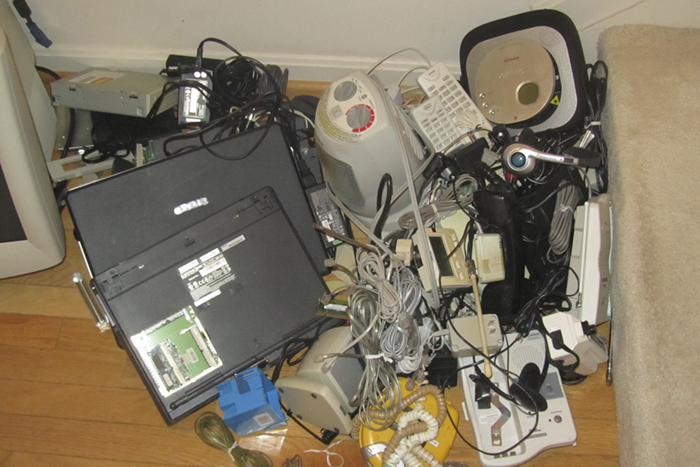
Credit: Kenny Jenkins, FlickrCC
Credit: Kenny Jenkins, FlickrCCCONTACTS
iFixit’s Comprehensive resources for repair manuals and guides
Guide to contacting your legislator to support Right to Repair Legislatio
EarthTalk® is produced by Roddy Scheer & Doug Moss for the 501(c)3 nonprofit EarthTalk. See more at https://emagazine.com. To donate, visit https://earthtalk.org. Send questions to: question@earthtalk.org.