
ROMAINE BROOKS: AN AMERICAN PAINTER
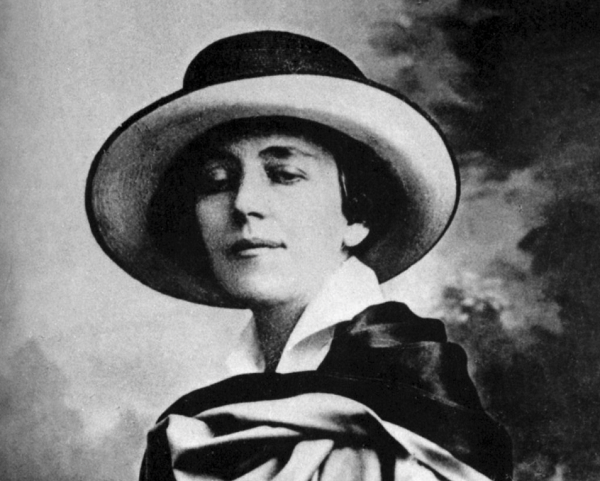
“We are what we can be, not what we ought to be.”
Romaine Brooks was an American painter who worked mostly in Europe. She largely ignored contemporary artistic trends such as Cubism and Fauvism, drawing instead on influences from a slightly earlier era to develop her own aesthetic.
Born in Rome in May 1874, Brooks spent her early years in New York with an alcoholic father who abandoned the family and a mentally abusive mother. Her unhappy childhood, by her own account, cast a shadow over her whole life, but she escaped at19 by moving to France—briefly working as a singer—to Italy, and then to Capri to study art.
Brooks returned to New York in 1901, determined to build her career as an artist. The light, colorful style she had developed in Europe evolved in New York to feature the far more subdued color palette that would come to define her style.
After New York, Brooks briefly lived in St. Ives on the west coast of England before returning to Paris where, in 1910, she was given her first solo show, at the renowned Gallery Durand-Ruel . The exhibition was a great success and established her reputation as an artist; the poet Robert de Montesquiou hailed her as “the thief of souls.” But Brooks was becoming disillusioned with both Paris and the social circles in which she moved. And she was beginning to feel that those circles were becoming critical of her as well. She described herself at the time as being a lapidée – a ”victim of stoning.”
Despite this feeling, Brooks remained in Paris and, in 1916, began a three-way relationship with American writer Natalie Clifford Barney and Barney’s partner, French aristocrat Lily de Gramont. The three remained together for the rest of their lives.
With strong emotional and social support around her, in an era politically and professionally dominated by men, Brooks embraced the counterculture to which she belonged and painted largely her own friends and lovers. Within this unconventional setting, and despite her rejection of a “normal” path, Brooks’ career continued to blossom.
In 1925, she was given solo exhibitions in Paris, London, and New York. In World War 2, she moved from occupied France to Italy and largely abandoned painting, preferring instead to promote her existing work with galleries and collectors. During this period of her life, she became paranoid and increasingly reclusive. She would spend weeks at a time in a darkened room believing she was losing her eyesight, she feared people were stealing her drawings, and—on at least one occasion—worried her chauffeur was planning to poison her. In 1965, she asked Barney not to lie down on the benches in her garden, for fear the plants would feed on her. “Trees especially are our enemies,” she said in a letter, claiming they “would suck us dry.” To accommodate Brooks’ increased desire for solitude, the women built a summer home consisting of two separate wings joined only by a dining room, the only place they would meet. They called it the Villa Trait d’Union, the “hyphenated villa.”
Although her work was largely forgotten after she died, in Nice, France in 1970, the developing gender politics of the 21 st century have recognized her as a pioneer. Joe Lucchesi, Professor at St. Mary’s College of Maryland, said in 2016, “There’s a lot of interest in her work because there’s a bit of a recognition with things that are going on now with…trans identities or more gender-fluid identities, and it’s very interesting to look back at someone 100 years ago who was also navigating things that weren’t so clear and developing a language really for the first time.”
HIGHLIGHT
DRAW AND PAINT WITH SARAH
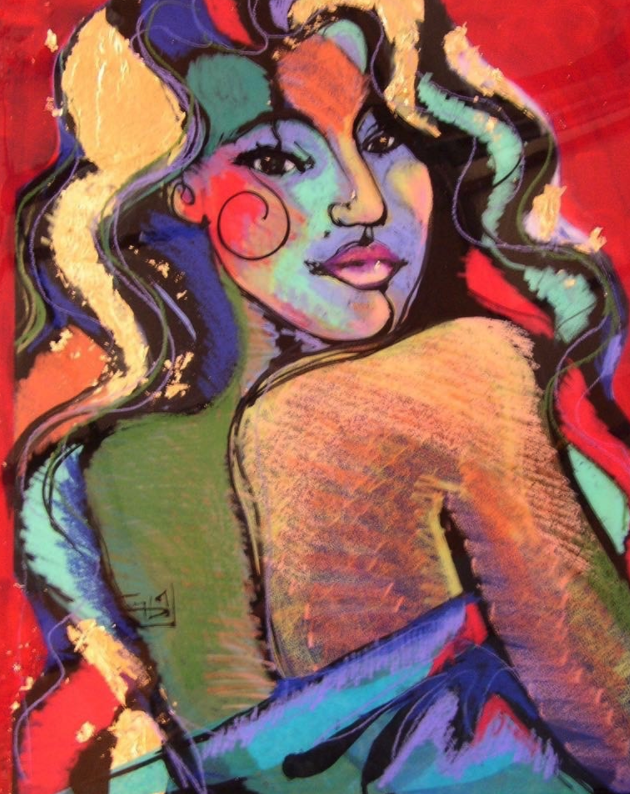
Thursday, July 15 from 6:30–8:30pm
Figure Painting & Drawing
With Sarah Holl
In this class, students can practice their drawing or painting skills while working from a live model. Students will be encouraged to find their own voices and explore various mediums. Students will receive individual instruction as well as group critiques. Open to all levels of experience. This class meets in the Great Hall in the main building.
$25