
RIP Jane Goodall As The World Celebrates Her Legacy
Jane Goodall left her legacy on challenging the idea of human uniqueness, but her activism also inspired multiple generations to come. Credit: Dean Calma / IAEA, FlickrCC.
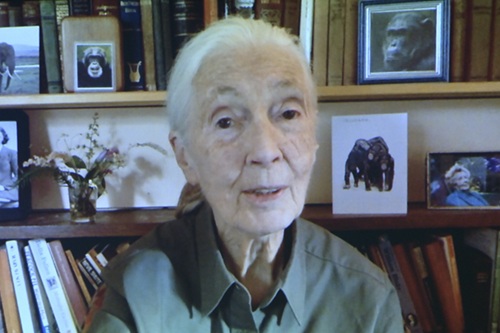
Dear EarthTalk: Everyone knows Jane Goodall was a great conservationist, but what exactly did she accomplish in her lifetime and what will be her legacy?
—Winnie Marcus, Wilmington, DE
Jane Goodall was an English anthropologist and primatologist. Around the world, she was most known for her 65-year-long study of wild chimpanzees. She pioneered the research on chimpanzees and completely transformed our view of the species. Before her passing in October 2025, she had dedicated her life to being a global advocate for human rights and environmental protection, even starting a youth empowerment program called “Roots and Shoots.”
Ever since childhood, Goodall loved the outdoors, nature and animals. She was unable to afford college to pursue her passion, but a trip to Nairobi, Kenya to visit a friend allowed her to meet paleoanthropologist Louis Leakey. Eventually, this connection allowed her to get a job at a local museum and later as part of a research team that would travel to Gombe Stream to study wild chimpanzees in Tanzania.
Many challenges, including disease and disagreements with fellow researchers, marked Goodall’s time in this expedition. Still, her commitment to observation and ethical research led the team to realize many breakthroughs that challenged scientific ideals of the time. Her research revealed that chimpanzees are omnivores who hunt for meat, not herbivores as previously thought. She also discovered that chimps use and manufacture their own tools, a trait once thought to be exclusive to humans.
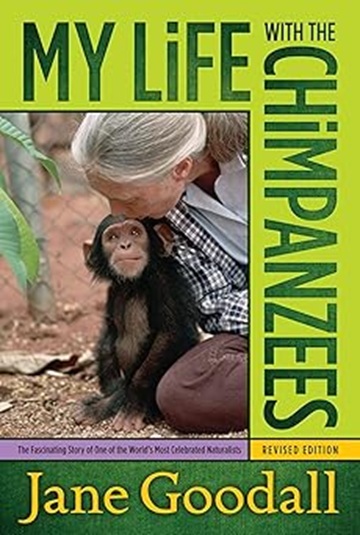
Goodall continued her research at Cambridge University, where many researchers disagreed with her naming the chimpanzees rather than assigning them traditional number designations. This conflict led her to write her recognized book “My Friends, the Wild Chimpanzees.” “‘I thought chimps were so like us but nicer, but they have a dark and aggressive side, just like we do, and they’re capable of violence, brutality, killing and a kind of primitive war,” Goodall said. ‘But also, just like us, they have a loving, compassionate and truly altruistic side, so that an adult male may adopt an orphan whose mother has died. There was this little infant, who was just three and a half, we thought he would die; there was nobody looking after him. And then, to our amazement, a 12-year-old male adopted him, carried him around, shared his food and his nest with him, and saved his life,’ she added.
While this was Goodall’s most well-known work, it was not her last. After receiving her Ph.d, Goodall continued to advocate for wildlife protection and conservation of endangered habitats.
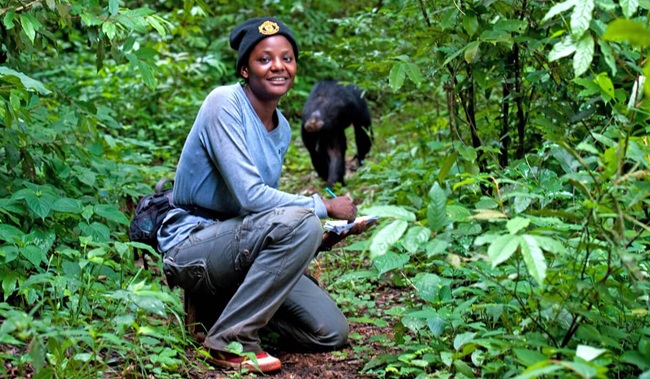
As a researcher, Goodall left her legacy on challenging the idea of human uniqueness. Her youth empowerment, reforestation and activism also inspired multiple generations to come together for conservation.
CONTACTS
Take Action For Forests & Greening Your Community
EarthTalk® is produced by Roddy Scheer & Doug Moss for the 501(c)3 nonprofit EarthTalk. See more at https://emagazine.com. To donate, visit https://earthtalk.org. Send questions to: question@earthtalk.org