
Abandoned Fishing Gear Fouls The World’s Ocean
Rachel Berliner and Saasthra Bojja December 31, 2025
Dear EarthTalk: Why is lost and abandoned fishing gear—so-called “ghost gear”—such a serious problem in the world’s oceans? —Jill McKay, Coos Bay, OR
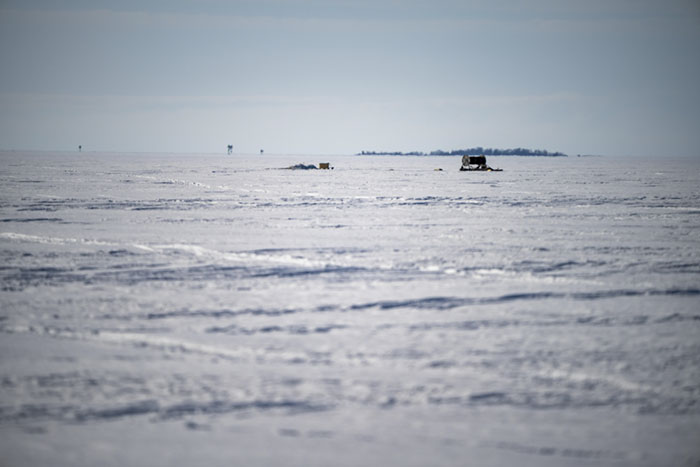
Lost and abandoned fishing gear, commonly known as “ghost gear,” is among the most dangerous and persistent forms of marine pollution on the planet. Unlike plastic bottles or food wrappers, ghost gear is intentionally engineered to catch animals—and when it is lost at sea, it often continues doing exactly that for years or even decades. Nets, lines, traps, hooks, crab pots, and fish aggregating devices (FADs) that are no longer actively managed by fishers do not simply vanish. Instead, they drift with ocean currents, sink to the seafloor, or snag on reefs, quietly trapping and killing marine life while degrading some of the ocean’s most sensitive ecosystems.
Ghost gear enters the marine environment in a variety of ways. Fishing equipment can be lost accidentally during storms, cut loose to avoid dangerous conditions, or abandoned when it becomes damaged beyond repair. Sudden weather events often force fishers to prioritize safety over retrieval, leaving expensive gear behind. In some regions—particularly in developing countries—fishers may deliberately discard old equipment because they lack access to ports, recycling facilities, or safe disposal options for heavy and complex gear. As global fishing and aquaculture operations have expanded over recent decades, so too has the sheer volume of equipment in use—and with it, the amount that goes missing each year.
The scale of the problem is staggering. Estimates suggest that roughly 640,000 metric tons of fishing gear are lost annually, and ghost gear now makes up nearly 10 percent of all marine debris worldwide. What makes this debris uniquely destructive is its durability. Most modern fishing gear is made from synthetic plastics such as nylon and polyethylene—materials designed to withstand saltwater, sunlight, and mechanical stress. Once lost, these materials degrade very slowly, allowing nets and lines to remain intact for decades.
As a result, ghost gear continues to “ghost fish”—the process by which abandoned gear keeps capturing animals long after it has been lost. Fish, crustaceans, seabirds, turtles, and marine mammals become entangled or trapped, often dying from drowning, starvation, infection, or exhaustion. Their decomposing bodies then attract scavengers and predators, which in turn become ensnared themselves, creating a deadly cycle that can persist indefinitely.
According to marine conservation experts, ghost gear is the single most lethal form of ocean debris. Joel Baziuk, associate director of the Global Ghost Gear Initiative (GGGI), an international coalition led by Ocean Conservancy, has described it as “the most harmful form of marine debris, pound for pound, because it’s designed to capture aquatic life.” More than 350 species have been documented entangled in ghost gear, including sea turtles, seabirds, seals, sea lions, dolphins, whales, and otters. Large whales may drag nets and lines for months or years, suffering deep wounds and infections while expending enormous amounts of energy that can ultimately prove fatal.
Ghost gear also damages habitats. When nets become lodged on coral reefs, kelp forests, or rocky bottoms, they can smother living organisms, break corals, and reduce light penetration. In coastal and reef ecosystems—already stressed by warming waters, acidification, and overfishing—this added pressure can significantly reduce biodiversity and slow recovery. Ghost gear can also impair visibility and navigation underwater, posing hazards to divers and damaging active fishing equipment, which adds further economic costs for fishing communities.
One reason ghost gear has long been overlooked is that much of it is out of sight. Unlike floating trash patches or littered beaches, abandoned gear often sinks or becomes submerged below the surface. “This is something you cannot see from the surface, so you can be blissfully unaware of it,” Baziuk notes. Its invisibility makes it easier to ignore, even though its impacts are ongoing and severe.
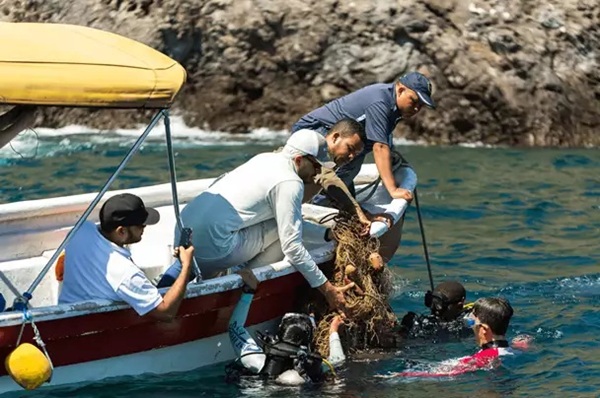
Despite the scale of the problem, solutions exist—and progress is being made. At the policy level, governments can reduce ghost gear by improving fisheries management, enforcing gear marking requirements, and supporting reporting and retrieval programs. When fishing gear can be traced back to its owner, accountability increases and abandonment decreases. International cooperation is especially important, since ghost gear frequently crosses national boundaries as it drifts with ocean currents.
Fishing communities themselves are central to addressing the issue. Organizations like GGGI work closely with fishers to develop practical, on-the-water solutions that reduce gear loss while maintaining livelihoods. “That’s one of the main reasons we really work closely with the fishing community to have them be part of the solution,” says Ingrid Giskes, director of GGGI. “If we can tackle ghost gear, we can stop that decline in fish populations overall.” Collaborative approaches—including improved gear design, better storage practices, and safer retrieval methods—can significantly reduce losses before they happen.
Innovation is also playing a growing role. Some manufacturers are developing biodegradable fishing gear components, such as twine that breaks down over time if lost, allowing traps and nets to stop fishing before they cause widespread harm. Others are experimenting with alternative materials and designs that reduce entanglement risks or make gear easier to recover.
Recycling initiatives are another important piece of the puzzle. Programs like Fishing for Energy provide fishers with cost-free options to dispose of old or damaged gear responsibly, converting it into energy rather than allowing it to end up in the ocean. Expanded access to such programs—especially in remote and developing regions—could dramatically reduce intentional dumping.
Individuals also have a role to play. Fishers can follow best practices, properly maintain equipment, and report lost gear when it occurs. Anyone who encounters ghost gear while boating, diving, or walking coastal areas can report sightings through databases and apps such as the GGGI Ghost Gear Reporter, helping cleanup teams locate and remove hazardous equipment. Consumers can support sustainable seafood choices by favoring species caught with low-impact methods—such as pole-and-line fishing—and by using guides like Monterey Bay Aquarium’s Seafood Watch to make informed decisions.
Ghost gear may be an invisible problem to many, but its consequences are tangible and severe. Addressing it requires cooperation across governments, industry, fishing communities, and consumers alike. With better management, smarter design, and shared responsibility, the oceans can be freed from this silent menace—allowing marine life and coastal ecosystems a chance to recover and thrive.
CONTACTS
The Impact of Ghost Gear: What It Is and How to Take Action today
EarthTalk® is produced by Roddy Scheer & Doug Moss for the 501(c)3 nonprofit EarthTalk. See more at https://emagazine.com. To donate, visit https://earthtalk.org. Send questions to: question@earthtalk.org.