2026 Rhode Island Republican State of the State Rebuttal
By House Minority Leader Michael W. Chippendale
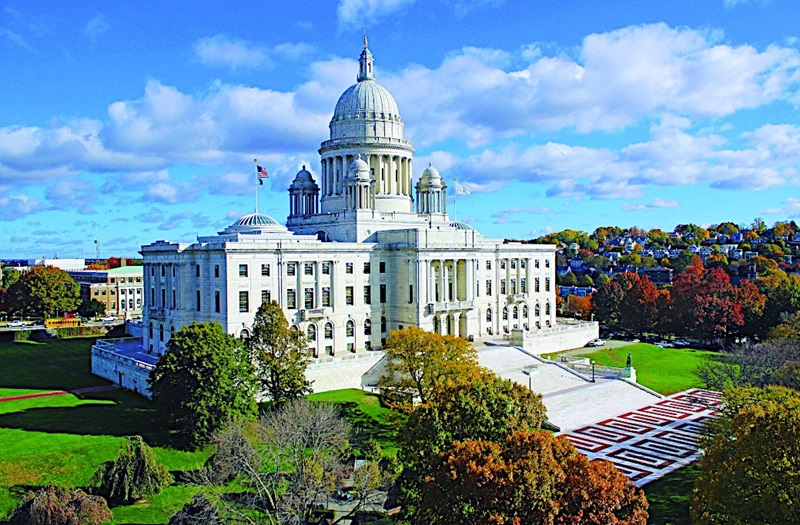
Good evening. Tonight, the Governor stood before the people of Rhode Island and talked about progress. About investments. About programs. About plans. All of which require tax dollars.
But what I want to talk about tonight isn’t policy – it’s pain.
Because for a lot of Rhode Islanders, the lived experience of the last twenty to twenty-five years doesn’t feel like progress at all. It feels like running faster and harder just to stay in the same place. It feels like doing everything you can to get by – and still falling behind. And if we’re being honest with ourselves, that pain didn’t appear overnight. It didn’t come from one bad year or one bad decision. It came from a pattern. A behavior. A way of governing that has gone largely unchanged for decades.
In order to understand where Rhode Island is going, we have to be willing to look honestly at where we’ve been.
In the year 2000, Rhode Island’s state budget was about $4.5 billion dollars. Last year, it was over $14 billion dollars – a 200% increase. Over the same period, real household income for Rhode Islanders only grew by about 25 to 30%. That isn’t a political talking point – that’s math.
According to the Rhode Island Public Expenditure Council, state spending growth has consistently outpaced economic and income growth for decades. Year after year. Administration after administration. Democrat majorities have been approving annual budgets for decades that grow faster than the paychecks of the people paying for them – in fact, it’s grown 7 times faster. And when spending grows faster than income for that many years, the consequences are not theoretical. They show up in the real world.
Consequences like young families realizing they can’t afford to stay in Rhode Island. Home prices have nearly tripled since 2000, and our available housing inventory has been swallowed up by out of state corporations and a transient, remote, out-of-state workforce largely from Boston and Manhattan.
Consequences like ever growing utility bills, higher property taxes, and more fees – all a direct result of the types of policies we heard about from the Governor tonight.
Consequences like municipalities being forced to pay for state-mandated programs that receive no funding. Cities and Towns must then pass that cost down to homeowners and renters in the form of increased property taxes and fees.
Consequences like families who never imagined needing help suddenly finding themselves relying on public assistance just to keep up.
Even the state’s own demographic data shows young, working-age Rhode Islanders exiting at a record pace – and this is the demographic that is needed to pay the taxes that the state budget relies on.
Here’s the trajectory if we stay on this path.
Over the next 25 years, we will have a shrunken working-age population trying to support a government that keeps growing faster than the paychecks of the people supporting it. Taxes, fees, and utility costs won’t drift upward – they will lurch higher. And here’s the part that frustrates people the most – all this spending hasn’t delivered the results we were promised.
For example:
We already spend more than triple what we did 25 years ago, yet healthcare is less affordable, housing is less attainable, workforce participation is lower and health and human services alone now consume more than a third of the entire state budget.
In 2000, Rhode Island’s energy prices were 20 to 40% above the national average. Today, they’re 42 to 74% higher than our northeastern neighbors alone. Households are effectively paying for 15½ months of electricity each year and most of these increases are the result of the 2021 Act on Climate –despite only 9% of Rhode Islanders stating that climate and clean energy is a priority.
In that same period, the median home price has gone from $136,000 to over $515,000. Despite 35 years of focused state spending on affordable housing, we rank 50th in new housing starts. Providence is the least affordable rental market in the country, and Rhode Island has the second-highest rate of chronic homelessness.
When it comes to public education, Rhode Island spends about $21,000 per student per year – among the highest cost in the nation. Yet, recent student proficiency rates have fallen back to early-2000 levels.
So, if spending alone was an actual solution as our Democratic friends seem to believe it is, Rhode Island would be thriving – but it simply isn’t.
When politicians say government should “take care of people,” what they mean is more programs, more spending, and more control from the State House. After decades of that approach, Rhode Islanders are paying more, earning less, and falling further behind. A budget should reflect our values, yes – but a government that truly values its people makes it easier for them to stand on their own, not harder.
We simply must change direction our state is headed.
Now – whenever someone like me talks about the income to spending disparity in Rhode Island, the response is predictable. We’re asked, “Fine. What would you cut?” And this is where the conversation usually goes off the rails.
The real problem in Rhode Island isn’t that one or two failing programs exist. It’s that spending growth has been allowed to run faster than income growth with very little discipline. If we were serious about changing direction, the first thing we would change isn’t a department or a program – it’s the rules of budgeting. Government spending should not be allowed to grow faster than the ability of the people to pay for it. Period. Tie spending growth to inflation and income growth, and suddenly every budget cycle forces prioritization instead of excuses, more pet projects and more taxes.
Layers of administrative duplication across departments, quasi-public agencies, and public authorities have been created, but never consolidated for efficiency. We have programs that began as pilots, never demonstrated worthy outcomes, and quietly became permanent budget line items. We have grown government to a grotesque size and see only downward trends in nearly every meaningful way of measuring success.
Twenty-five years ago, our state government employed about 16,000 people. Today, that figure is down by 2% – but it should be down by much more. Back then, Rhode Island also spent $122 million dollars on private consultants.
Today, however – just 25 years later, our cost for private consultants has quadrupled to over $600 million dollars, and our state workforce has only shrunk by 2%. This is the very definition of government bloat – and it’s hidden in plain sight.
These trends need to be reversed, and we need to seriously right-size our state budget. None of that means cutting care for vulnerable people. None of that means closing schools or gutting public safety. It means slowing the growth of bureaucracy, demanding outcomes before dollars are allocated, and being honest that federal money isn’t free – especially today as Rhode Island relies on three times as much Federal Funding as it did in the year 2000. So, the solution isn’t “cut X department tomorrow.”
The solution is to change the behavior of state government so spending growth aligns with income growth. That’s how we stop digging the hole deeper – and it’s not a novel idea. Quite bluntly – it’s what every single Rhode Island family does every week when they sit at the kitchen table with their checkbook and their every-growing pile of bills. They prioritize and tighten their belts.
Rhode Islanders aren’t asking for miracles. They’re asking for honesty and transparency. They want to see spending discipline. They desperately want a government that understands their reality. They want to live in a state where their hard work is rewarded, not punished. They want a Rhode Island where building a life here doesn’t feel like swimming upstream and where the future looks affordable again.
In conclusion, our future is not written yet – but the trend lines are telling us the hard truth. And if we’re willing to listen to them, we still have time to change our course – but it will require abandoning the failed governance model of the past 25 years. Legislative Republicans have been fighting for this type of fiscal restraint for decades –and we will continue to do so, because the good people of Rhode Island deserve no less.
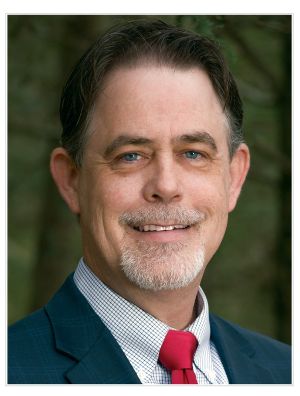
Michael W. Chippendale
Good night, God bless you, and God bless the State of Rhode Island.