
Ghost Malls Repurposed For Community Benefit Coast To Coast
January 22, 2026
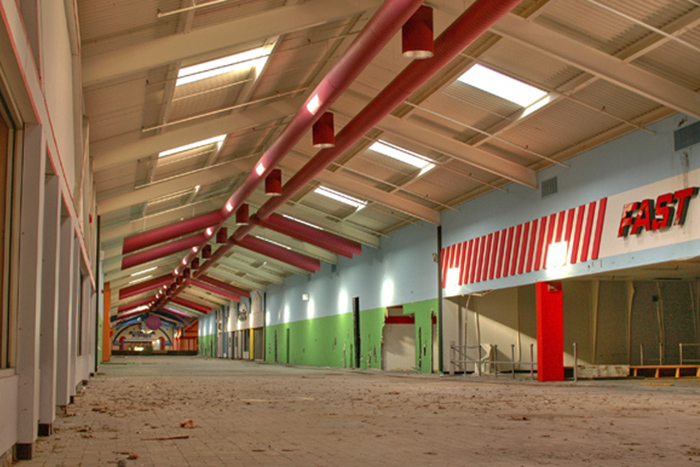
Not all abandoned malls like this one in McKinney, Texas have to remain dilapidated and unused given the preponderance of creative ideas for how to use the real estate for the betterment of the community and environment. Credit: Daniel James, FlickrCC.
Dear EarthTalk: What’s being done to repurpose some of the ghost malls — shopping malls that no longer have retail tenants — across the U.S. for greener purposes?
—John Douglass, Tampa, FL
In the 1980s, malls were the heart of American social life. They were bustling centers featured in TV shows and movies as symbols of youth culture. Today, however, many of those same malls stand abandoned. These ghost malls take up large sections of land that could be used for more sustainable purposes.
According to Carey L. Biron from Context News, vacant buildings are being turned into thriving crop growing spaces. By transforming these abandoned malls into productive, eco-friendly farms, cities are using ghost malls in ways that serve people while being ecologically beneficial.
Many U.S. cities are experimenting with farming inside empty buildings, to turn them into thriving centers of local food production. Urban farmers aim to grow food close to consumers instead of shipping it long distances. This method drastically helps cut carbon emissions released from transportation. Carey Biron from Context News explains that these small-scale vertical farms bring fresh produce to nearby communities, especially to areas where access to healthy groceries is limited.
Transforming ghost malls into indoor farms allows for year-round sustainable food production. Inside these spaces, towers of crops like kale, bok choy, and herbs are grown hydroponically without soil. According to Moonganic, these hydroponic growing facilities can produce fresh vegetables all year long while using less water and eliminating pesticides. LED lighting and automated systems make farming more efficient and climate resilient.
Repurposed malls allow for economic opportunities. Turning empty retail space into farms opens up jobs. A facebook community post on urban mall farming explains that reusing these buildings helps reduce construction cost, while simultaneously being economically beneficial.
Cities across the country are recognizing the benefits of indoor farming. As Context News notes, officials in cities like Washington, Chicago, and Baltimore, have begun offering tax breaks and other support to make vertical farming in vacant buildings possible. With the government backing, repurposing ghost malls is becoming a more widespread idea.
Some ghost malls are being transformed into green spaces that will benefit the local community. Cities like St. Paul has restored old malls into wetlands, wildlife habitats, etc… Planetizen highlights that converting malls into parks brings back nature into previously urban areas. The Cool Down reports that natural spaces help reduce the urban heat island effect, protecting vulnerable residents during dangerous heat waves.
Ghost malls once symbolized economic decline, but now represents an opportunity for a greener future. Readers can contribute to these efforts by supporting local green projects and encouraging indoor farming initiatives. With enough public support, abandoned malls can become powerful examples of how communities are taking action against climate change.
CONTACTS
Abandoned malls turned into urban farms
Communities make surprising use of shut-down malls: ‘The mall is becoming cool again’
EarthTalk® is produced by Roddy Scheer & Doug Moss for the 501(c)3 nonprofit EarthTalk. See more at https://emagazine.com. To donate, visit https://earthtalk.org. Send questions to: question@earthtalk.org.