
Audubon Society of Rhode Island
It’s Turtle Crossing Season…
Please Slow Down and Let Them Cross Roads Safely.
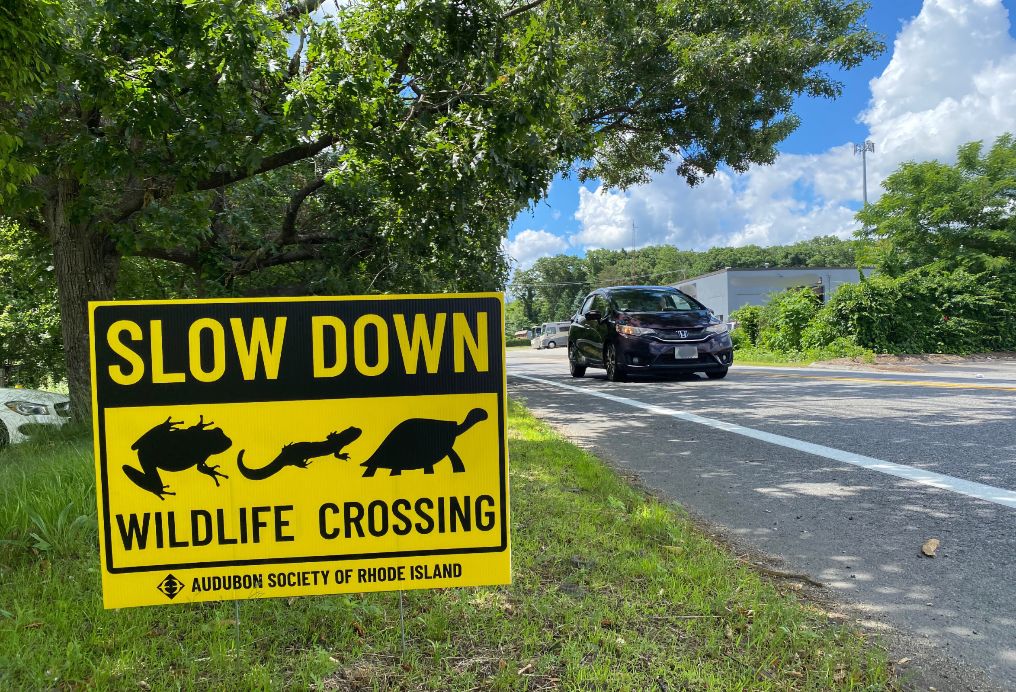
In May and June, aquatic turtles such as the eastern painted turtle and the American snapping turtle will be leaving their watery habitats of ponds, rivers, and wetlands to set out and find suitable nesting sites to lay their eggs. For many, this includes crossing many of our busy roadways.
According to the Wildlife Clinic of Rhode Island, the organization received 42 turtles in 2025 that had been hit by cars. This is why it is critical that drivers slow down when passing close to ponds, rivers, and wetlands in the spring.
Land turtles such as the eastern box turtle, and semi-aquatic species like the wood turtle, are also susceptible to road mortality. These species look for sandy or loamy soil in fields, open woods, and occasionally on people’s lawns for nesting sites. Having already crossed the road once to lay eggs, these turtles will cross yet again to return to their habitats. It’s dangerous for a slow-moving turtle to be on a busy road.
The eggs deposited in spring will hatch in late August to early September. Many hatchlings will also attempt to cross roadways to reach watery habitats. You can help ensure safe crossings by slowing down on the roads and watching for our native turtles.
You can help a turtle cross the road.
Rhode Island Division of Fish and Wildlife provides recommendations for handling turtles when helping them to cross roadways. Be aware and careful of passing cars.
Please support the turtle by using both hands, one on each side of the shell, between the front and back legs.
Carry the turtle across the road in the direction it was heading and place it a few feet off the road.
Never hold a turtle just by its top shell or carapace, as this will hurt it, and will not give you a secure hold on it. You also never want to grab a turtle by its tail, as this too will cause pain and injury.
For large snapping turtles, gently shepherd it across the road with a stick or a broom or get help in herding a large snapping turtle across the road.
Never relocate a turtle, it is stressful to the turtle and can cause death.
You can help alert drivers. Audubon is offering yard signs to alert drivers of potential wildlife crossings and asking them to lower their speed. If you live near a pond or wetland, help wildlife by placing a sign in your yard for the months of May, June, August, and September. Visit https://asri.org/wildlife-crossing for details and to order your sign today.
Wild turtles need to remain in the wild. Although many are charmed by native turtles, any species found in the wild should never be kept as a pet. In Rhode Island, it is illegal to remove an any native reptile of amphibian from the wild, as many of them face severe population declines that could lead to local extinction.
Photos:
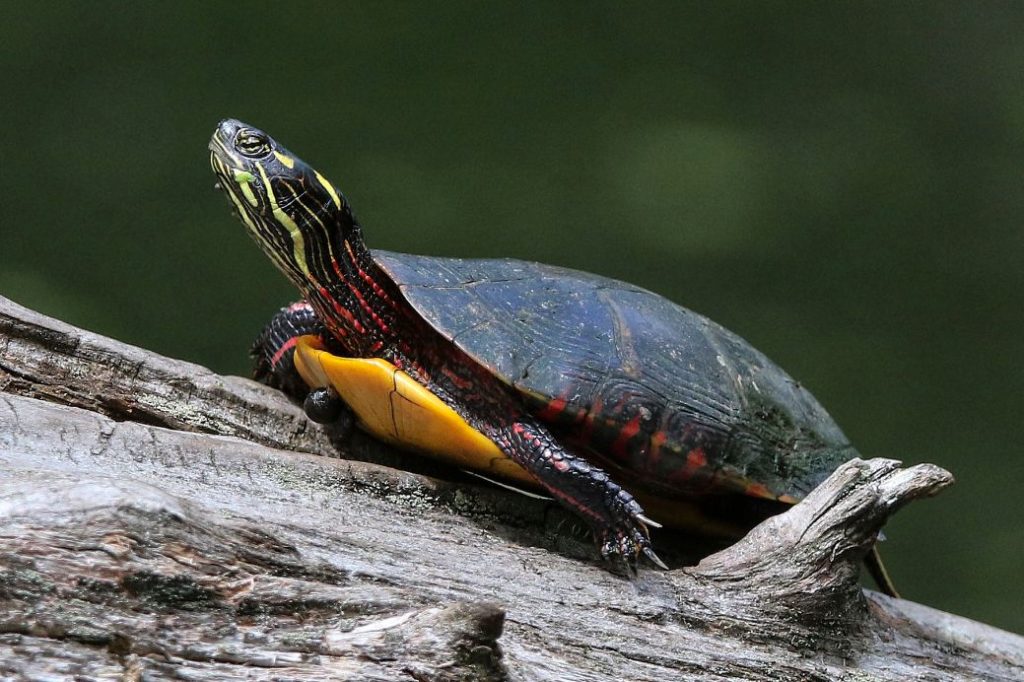
Painted turtle at the Audubon Caratunk Wildlife Refuge in Seekonk, MA. Photo by Glenn Osmundson
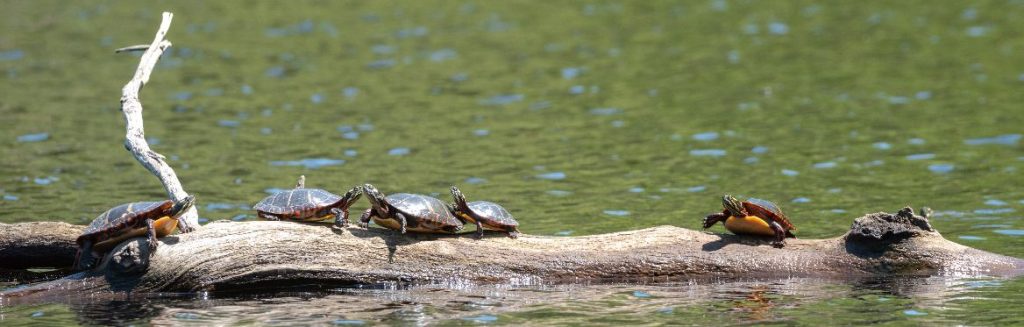
Five painted turtles on a log at Audubon Fisherville Brook Wildlife Refuge in Exeter, RI. Photo by Jason Major
Help turtles cross our roadways safely by using an Audubon Wildlife Crossing Sign in your yard!
Hope M. Foley
Media Relations
Audubon Society of Rhode Island
401-486-1503