
India Addresses Water Crisis With Decentralization
Serena Goragandhi October 10, 2026
Dear EarthTalk: How is India making use of decentralized water technologies to cope with the country’s shrinking access to freshwater and what can we learn from them? —Name withheld
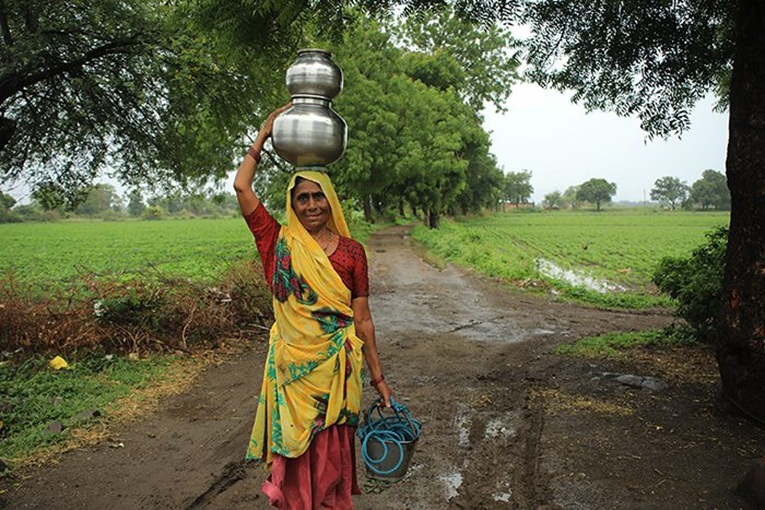
India faces an intense environmental challenge, with roughly 600 million people experiencing high to extreme water stress. For decades, the traditional response centered on massive, centralized infrastructure projects like giant dams and transmission pipelines. While important, these large projects are expensive, slow to build, and often fail to reach vulnerable communities. Meanwhile, groundwater is being pumped out much faster than rain can refill it.
To bridge these gaps, decentralized water technology is gaining ground by focusing on capturing, treating and managing water locally. The most immediate solution is modern rainwater harvesting. In urban centers like Bengaluru and Chennai, local laws require new buildings to install rooftop harvesting systems. Today, these are paired with Internet-of-Things (IoT) monitors. These smart devices track water levels and quality in real time, alerting leaders via smartphone apps when filters need maintenance.
The most immediate and affordable decentralized solution is modern rainwater harvesting. While collecting rain is an ancient practice, new technology has made it far more efficient. In major urban centers like Bengaluru and Chennai, local laws now require new buildings to install rooftop rainwater harvesting systems.
On a larger scale, communities use digital mapping to build small check dams and percolation pits across fields. These structures slow down rushing monsoon rainwater, giving it time to naturally refill underground aquifers. Communities are also changing how wastewater is treated by utilizing engineered wetlands and bio-filtration systems right inside neighborhoods. They use specific plants, sand and natural bacteria to clean greywater without harsh chemicals, allowing it to be safely reused to water crops or flush toilets.
In response, agencies are introducing stricter rules to limit Reverse Osmosis (RO) purifiers and encourage low-cost, solar-powered disinfection units that kill bacteria in local wells without wasting a single drop. In response, agencies are introducing stricter rules to limit RO use and encourage low-cost, solar-powered disinfection units that kill bacteria in local wells without wasting a single drop. According to Sunita Narain of the Centre for Science and Environment, true water security relies on putting decentralized management technologies directly into the hands of local communities. This shift also requires addressing “bad tech” habits. For years, households relied on home RO purifiers, which can waste up to 75 percent of the water that enters the machine.
Everyday people can change how they use water by setting up gutters and storage tanks to catch rain, which significantly lowers municipal bills. Citizens can also join grassroots groups to clean up polluted local lakes, transforming neglected areas back into vibrant water basins.
CONTACTS
EarthTalk® is produced by Roddy Scheer & Doug Moss for the 501(c)3 nonprofit EarthTalk. See more at https://emagazine.com. To donate, visit https//earthtalk.org. Send questions to: question@earthtalk.org