
With A Home Battery, Ride Out The Storm & Lower Your Carbon Footprint
Dear EarthTalk: Is installing a home battery environmentally worthwhile even if I rarely lose power? —Mark Hilton, via email
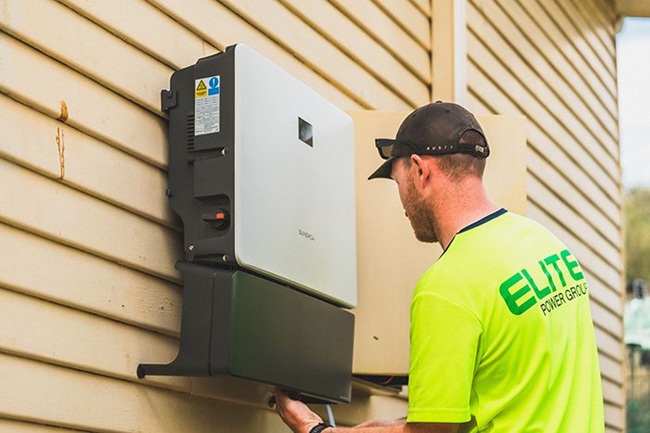
Homeowners who want to live more sustainably often face a tough question when considering energy storage. It is true that manufacturing a home battery comes with an initial environmental cost. Mining raw minerals, making battery cells and shipping heavy units all create carbon emissions right away. Because of this, it is easy to wonder if a battery sitting idle in a garage is really worth the upfront pollution.
However, when paired with rooftop solar panels, home batteries do far more than just wait for blackouts. By storing excess solar power generated during the day and using it at night, a battery actively cuts reliance on fossil fuels every day. As energy analyst Ronald Brakels explains: “For a typical battery, the emission benefits are likely to exceed the emission cost by around 10 times or more. So, if you care about reducing emissions, install a home battery.”
Home batteries also play a role in supporting the wider power grid during peak demand hours. At night, when millions of people turn on lights and A/C, power companies often fire up extra gas plants to keep up with demand. Stored battery power helps avoid drawing from the grid during these high-emission hours. Clean energy writer Kristina Zagame notes: “If you have a time-of-use rate electric plan… you can program your battery to charge when rates are low, so that you can pull power from your battery during expensive hours.”
When thousands of individual home batteries are connected together digitally, they form what is called a Virtual Power Plant (VPP). During times of extreme heat or sudden grid strain, these networks can feed stored solar energy back into the community grid to prevent blackouts. In fact, during a heat wave on the evening of September 9, 2026, Sunrun and Tesla dispatched more than 580 megawatts to the California grid in the largest VPP demonstration to date. This collective action keeps dirty, fossil-fuel-powered backup generators offline. By supplying clean power right where it is needed, neighborhoods can stabilize regional energy supplies without building new power plants. There are, however, exceptions to keep in mind. A standalone battery that charges purely off a coal-heavy electricity grid without solar panels or smart charging schedules will deliver very few environmental benefits. To make a real difference, the energy going into the battery must be clean in the first place.
Ultimately, a home battery paired with renewable power does not need frequent blackouts to prove its value. Working silently behind the scenes every day, home batteries shrink household carbon footprints, ease strain on local power grids, and speed up our transition to clean energy.
CONTACTS
EarthTalk® is produced by Roddy Scheer & Doug Moss for the 501(c)3 nonprofit EarthTalk. See more at https://emagazine.com. To donate, visit https//earthtalk.org. Send questions to: question@earthtalk.org