Audubon Society of Rhode Island
Rhode Island Legislators Pass
An Act Relating to Health and Safety: Pesticide Control
Rhode Island is the Second State in the Nation
to Restrict Dangerous Anticoagulant Rodenticides:
Protecting Our Communities, Pets, Wildlife and Birds of Prey
Smithfield, RI (June 19, 2026) – With the signature of Governor Dan McKee on June 18, 2026, Rhode Island is now the second state in the country to pass legislation protecting wildlife against dangerous blood-thinning rat poisons: anticoagulant rodenticides. California signed tighter restrictions, The Poison-free Wildlife Act, in 2024. Other New England states have also introduced similar legislation.
Whether leading the fight to ban the use of the insecticide DDT in the 1960s, or more recently advocating to restrict dangerous neonicotinoid pesticides, Audubon has long been on the front lines of fighting for stronger regulations on chemical pesticides.
The law restricts the use of anticoagulant rodenticides and provides a commonsense approach to pest management. It creates a scientifically informed, replicable framework for Rhode Island communities that will sustainably reduce rodent populations, while also protecting the birds of prey and mammals that naturally manage these rodent populations.
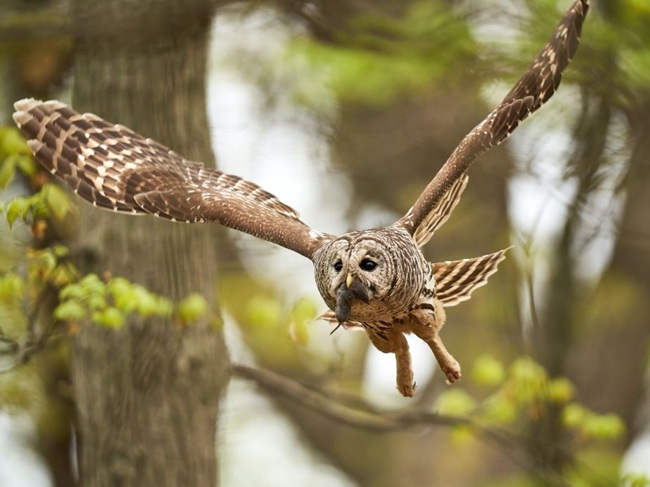
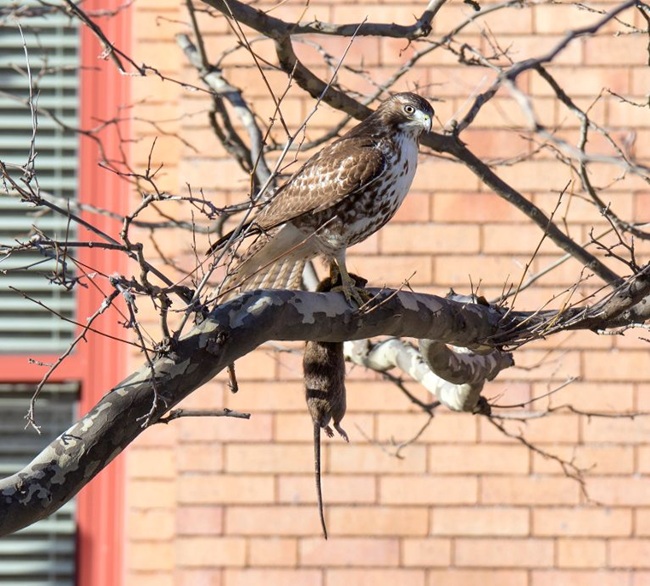
An especially vulnerable population to these poisons is raptors. Hawks, owls, and eagles – capable of eating thousands of rodents each year – only need to ingest one or two poisoned rats or mice for it to wreak havoc on their bodies. As these anticoagulants accumulate in these birds of prey, it often ends in serious injury or death. As an example, one Great Horned Owl can prey upon as many as 4,000 rodents a year.
“This has been a top legislative priority for Audubon in the past three years,” said Audubon Executive Director Jeffrey Hall. “We are proud to have introduced this Bill in the General Assembly in 2024 and taken on a leadership role, working with veterinarians and wildlife rehabilitation experts to support the science behind this legislation. Birds of prey play a critical role in Rhode Island’s ecosystems. Banning the sale and use of anticoagulant rodenticides not only protects the wildlife that prey on rodents, it also removes dangerous poisons from our homes and communities.”
Audubon is grateful to State Representative Rebecca Kislak (District 4, Providence) and Senator Melissa Murray (District 24, Woonsocket and North Smithfield) for sponsoring this legislation in back-to-back years. We also thank Rhode Island Governor Dan McKee for signing this important legislation into law.
It is important to note that the legislation includes the opportunity for municipalities to voluntarily participate in finding alternative pest management methods best suited for their communities. They will be able to proactively transition from their status quo of rodent management to safer, integrated, effective alternatives.
“Rhode Island is not taking a reckless leap into unproven alternatives for rodent management by passing this legislation,” said Audubon Advocacy Director Maxwell McFarland. “Rather, we can now lead by example with policy that simultaneously advances stronger wildlife protections and effective rodent management.”
First-generation anticoagulants (FGARs), which are generally less potent and less commonly relied upon, will be restricted from retail sales starting March 1, 2027. Second-generation anticoagulants (SGARs) – which have become widely used due to their lethality – will be restricted from retail sale January 1, 2028. The voluntary, municipal Integrated Pest Management (IPM) pilot program is to begin no later than July 1, 2027, so communities will have ample time to implement effective alternatives before the full transition. A statewide prohibition on first and second-generation anticoagulants takes effect on January 1, 2029.
Exemptions will exist for state and municipal employees to use these rodenticides in the case of specified public health activities: protection of drinking water, controlling vectors for mosquito borne illness, eradication of non-native invasive species of rodents, or rodent infestations deemed a public health issue where all other alternatives, including nonchemical ones, are inadequate to control the infestation. Additional exemptions include the use in medical waste generators or facilities registered annually and subject to inspection under 21 U.S.C. § 360 et seq. 5 and compliant with the FIFRA Act. Exemptions will also exist for use in agricultural activities: warehouses used to store foods for human and animal consumption, slaughterhouses, canneries, and sites for distillery, meadery, brewery, or winery.
Photo captions:
Barred Owl in the forest with rodent. Photo credit: Barred Owl @ Jenny Zhao courtesy of Mass Audubon for SGARs.
Hawk with rat in Providence. Photo credit: Peter Green
The Audubon Society of Rhode Island is an independent not-for-profit environmental organization dedicated to the protection of birds, wildlife, and their habitats through environmental education, advocacy, and land conservation. The state’s first environmental organization, the Society now protects nearly 10,000 acres in a network of refuges, pristine properties and wildlife habitats. One of the largest private environmental educators in the state, Audubon education staff teaches approximately 30,000 people across the region each year.