
Outrunning Global Warming? Coral Reefs Move Toward Poles
Serena Goragandhi October 10, 2026
Dear EarthTalk: Is it true that coral reefs are moving toward the poles due to the warming oceans? Can they outrun climate change’s damaging effects?—Mike T., Seattle, WA
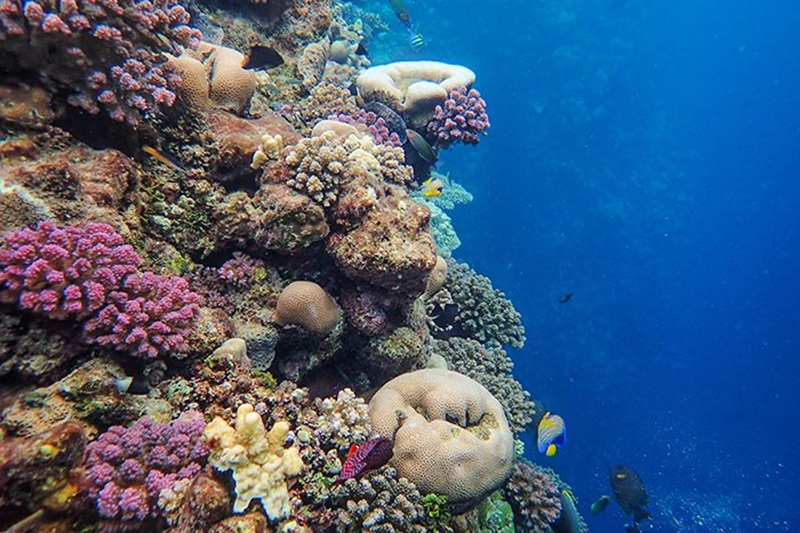
Greenhouse gas emissions around the globe are driving tropical ocean temperatures to historic highs. As a result, coral reefs are attempting to migrate toward cooler, higher-latitude waters. This shift has sparked widespread debate over whether these vital ecosystems can naturally outrun the devastating impacts of climate change. Marine organisms are indeed expanding their geographic ranges, but recent scientific modeling reveals that adaptation speeds cannot keep pace with the sheer velocity of modern environmental degradation.
The biological urge for marine life to track cooler temperatures is well-documented. As Dr. Noam Vogt-Vincent, a National Oceanic and Atmospheric Administration (NOAA) climate and global change postdoctoral fellow at the Hawaiʻi Institute of Marine Biology (HIMB )Marine Ecological Theory Lab, explains regarding historical shifts: “As the ocean warms, species tend to move poleward… We know from the fossil record that coral reefs have previously expanded their ranges in response to past climate change, but we didn’t know whether this was a matter of decades or millennia.”
To test whether this migration can outrun current warming trends, researchers turned to advanced predictive modeling. Using high-powered simulations on the University of Hawaiʻi’s Koa supercomputer, a recent multi-institution study evaluated how global coral networks will respond over time. Dr. Lisa McManus, a HIMB assistant research professor and co-author of the study, noted the scope of the project: “By modeling coral reefs globally and incorporating evolution and connectivity, this study provides an unprecedented long-term view of how these complex ecosystems will respond to climate change.”
The supercomputer simulations delivered a sobering reality check. While coral larvae can drift poleward via ocean currents, the pace is far too slow to offset the mass destruction happening in equatorial zones. Furthermore, high-latitude environments present unexpected secondary barriers. Cooler waters often feature higher ocean acidification rates and a lack of established, interdependent species networks, meaning that arriving corals face severe survival hurdles even if temperatures are temporarily favorable.
Corals do possess some natural resilience mechanisms, including waterborne larval dispersal and shifts in symbiotic microalgae ratios to gain temporary heat tolerance. However, these evolutionary adjustments happen incrementally, whereas thermal stress events like widespread bleaching occur with abrupt, catastrophic frequency. This widening gap between slow adaptation and rapid environmental decline leaves many reefs vulnerable to collapse before they can evolve. So, relying solely on natural migration or localized survival shifts provides a false sense of security for the future of these marine habitats.
Ultimately, scientists emphasize that corals cannot simply outrun climate change. While new, small patches of high-latitude coral will likely establish over time, safeguarding the vast majority of the world’s reef ecosystems relies entirely on ambitious, immediate reductions in global greenhouse gas emissions.
CONTACTS
EarthTalk® is produced by Roddy Scheer & Doug Moss for the 501(c)3 nonprofit EarthTalk. See more at https://emagazine.com. To donate, visit https//earthtalk.org. Send questions to: question@earthtalk.org.