
My Way Or The Flyway: Migratory Birds Need Your Help To Get Along
Tim Weighart October 22, 2026
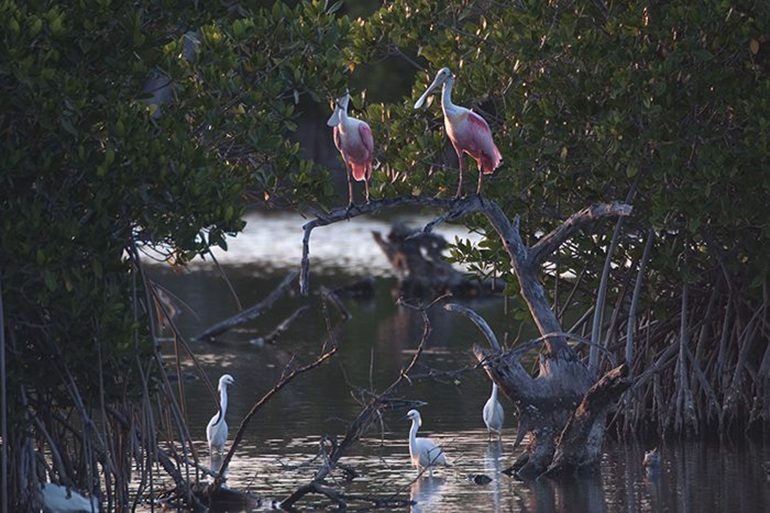
Our everyday actions help determine the fate of migratory birds that fly thousands of miles every year between winter and summer grounds. Credit: Roddy Scheer.
Dear EarthTalk: What are some ways we can help migratory birds make it safely past our regions during the critical fall and spring migration seasons? —L.K., Boone, IA
Nearly half a billion birds cross the U.S. to travel to their northern nesting grounds in the spring, and then return to central and south America to escape the cold in the fall. These long-distance migrants know when and where to travel by noting the changing length of the days, orienting themselves with the moon and stars, and even sensing magnetic fields. “The movements are massive,” migration ecologist Andrew Farnsworth says. “On a big night in the spring, you’re talking 450 [million] to 500 million birds flying under the cover of darkness.”
Many birds fail to make the trip. Not only do they have to weather thousand-mile-long flights while avoiding predators, enduring extreme weather conditions, and finding food and shelter, but there are also a wide variety of manmade obstacles that now account for some of the largest causes of avian fatalities.
House cats are the largest human threat to birds, killing roughly 2.4 billion birds a year in the U.S. alone. Cat owners can do their part by keeping their feline companions indoors, within enclosed outdoor patio areas, or on a leash. Homeowners can do even more for migratory birds in their backyards by growing native plants to provide either food or shelter for them, and by providing clean birdfeeders and baths.
At least one billion more birds die annually from crashing into buildings, usually because the reflections of glass windows confuse them. Additionally, bright city lights disorient birds that rely on the moon and stars for navigation, causing them to get drawn away from their migration routes and into the city. They are then more likely to collide with buildings or waste valuable energy on a detour.
In order to reduce bird collisions, experts advise turning off or dimming external lights later at night to reduce light pollution and help the stars remain visible to migrating birds. Adding patterns to your windows via streamers, tempera paint or glass window films and decals can also make glass surfaces more visible to passing birds.
Those looking to inspire greater systemic change to benefit migratory birds should look into the advocacy programs and educational events provided by their local governments and Audubon chapters. If you have noticed substantial threats or changes to migration in your area, consider canvassing your officials and neighbors, organizing community trash pickups or tree plantings, and reporting your daily sightings on eBird.
There are also many ways for curious birders to monitor migration patterns in their area. Anyone can sign up for free daily updates from BirdCast to hear localized reports on the large bird populations passing by.
Anyone out birdwatching from March to May or September to November should keep an eye out for unusual sightings. “It’s always like Christmas morning, going out each morning and seeing what new presents arrived from the north,” migratory bird research assistant Dylan Osterhaus says.
CONTACTS
EarthTalk® is produced by Roddy Scheer & Doug Moss for the 501(c)3 nonprofit EarthTalk. See more at https://emagazine.com. To donate, visit https//earthtalk.org. Send questions to: question@earthtalk.org.