
Audubon Conservation has Four Legs.
Come Meet the Goats!
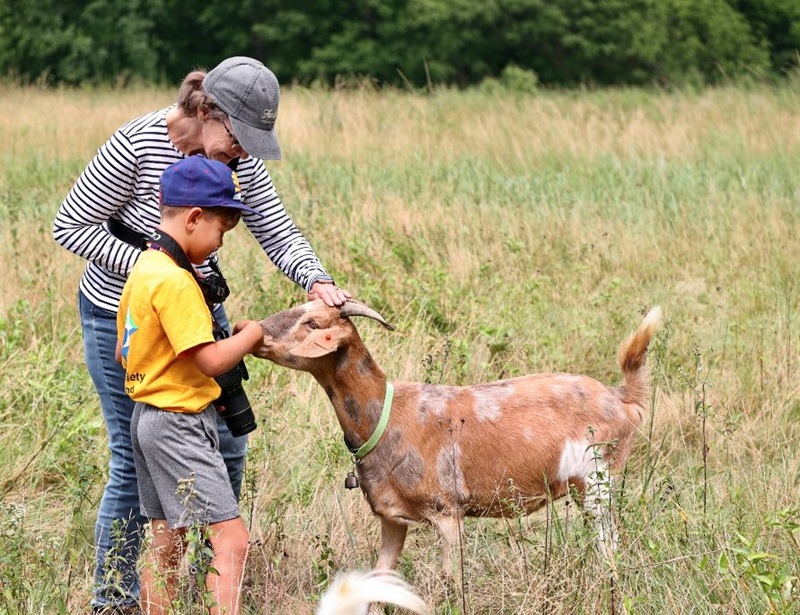
SMITHFIELD, RI (November 16, 2026) – Have you herd? Audubon Society of Rhode Island has welcomed six highly effective new conservation partners that have managed natural landscapes for thousands of years. Adopted from a farm in May 2026, six goats have joined Audubon’s stewardship team and were busy restoring native habitats on Audubon wildlife refuges last summer. These curious, charming, and hardworking grazers have put their appetites to work by targeting invasive plant species that threaten local ecosystems.
Goats play an important role in conservation. They can easily access areas that are difficult to manage with mowers or hand tools, including steep hillsides, rocky terrain, and stone walls. As natural browsers, they eagerly consume invasive vegetation and can clear approximately one acre in just three days. Along the way, they provide natural fertilizer that enriches the soil.
Their work supports healthier forest and field habitats. “The use of goats provides another tool for Audubon when tackling the removal of invasive species,” said Audubon Director of Properties Laura Carberry. “Audubon does not use herbicides, so these goats are used to clear challenging places that are hard for us to reach, but they are able to easily access. They protect the land from heavy machinery that might otherwise be necessary, and they are a joy to work with.”
For generations, Rhode Island’s natural landscapes have supported an extraordinary diversity of birds, mammals, reptiles, amphibians, insects, and native plants. Today, many of these habitats face increasing pressure from invasive species such as multiflora rose, Japanese knotweed, barberry, bittersweet and autumn olive. These aggressive plants crowd out native vegetation, reduce biodiversity, alter wildlife habitat, and increase long-term land management costs.
When invasive plants take over, Rhode Island’s natural habitats are impacted.
- Native wildflowers disappear.
- Nesting habitat is reduced for birds and other wildlife.
- Pollinators lose critical food sources.
- Young trees struggle to grow and regenerate forests.
- Water flow can be disrupted.
- Biodiversity declines.
From May through October, Audubon’s conservation goats graze invasive species at Audubon wildlife refuges throughout the state. During the colder months, they will take on another important role: Audubon Ambassadors.
Meet the Goats!
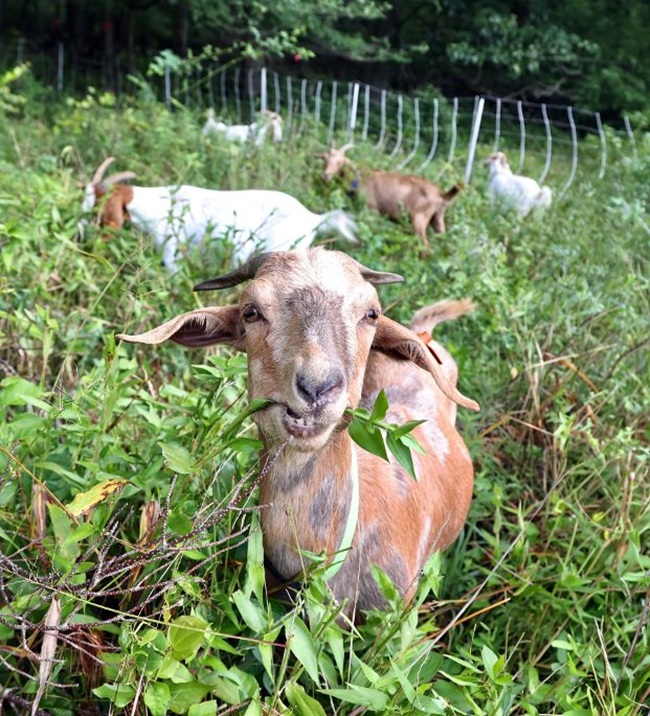
You can meet Bubbles, Fern, Junebug, Violetta, Penny, and Buttercup through seasonal educational programs that showcase innovative, sustainable, and accessible approaches to habitat management. These four-legged conservationists help demonstrate how practical land stewardship can benefit both wildlife and our communities.
Private Goat Hikes
December 2026 through April 2027.
Audubon’s six goats are on break this winter from removing invasive species. Join them for exercise and enrichment while enjoying a private walk at Audubon’s Fisherville Brook Wildlife Refuge in Exeter, RI. Proceeds support their winter food and care.
Maximum 8 participants. For information, fees, and available dates contact Laura Carberry at lcarberry@asri.org.
Wintertime with the Goats
December 5, 2026; 10:00am–12:00pm.
Enjoy a nature walk with goats through the stillness of the winter. Ages 6+.
For more information and to register, visit the events calendar at asri.org/calendar.
To learn more and support Audubon’s Goats for Good initiative, visit asri.org/goats-for-good.
Photos: Audubon’s conservation goat named JuneBug munches in the foreground, with (from left) Penny, ButterCup and Bubbles in the back. Photo credit Richard Staples.
Audubon Society of Rhode Island member Betsy Staples and her grandson Reid greeting JuneBug the conservation goat. Photo credit Richard Staples.