
Something is Happening to Rhode Island’s Ospreys
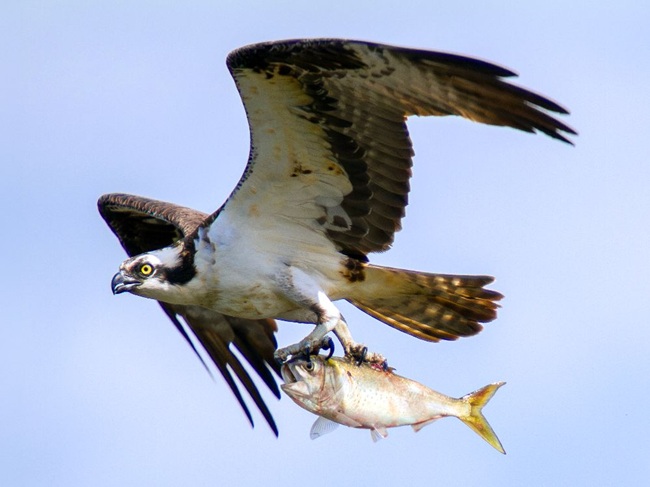
Audubon’s 2026 data reveal one of the lowest nesting success rates recorded in the past decade, mirroring trends observed along the Atlantic Coast.
Smithfield, RI (September 29, 2026) – Audubon Society of Rhode Island’s long-running Osprey Monitoring Program has documented a decline in nesting success during the 2026 breeding season. Only 38% of the 339 monitored nests successfully fledged young, making 2026 one of the poorest breeding seasons in the past decade.
Ospreys, one of Rhode Island’s most charismatic birds of prey, migrate from their wintering grounds in Central America and arrive to the Ocean State in March to claim their territories and begin the breeding season. Under normal conditions, Ospreys fledge at least two young per nest each summer.
Prior to the 1970s, Osprey populations dramatically plummeted due to the harmful pesticide DDT, which is now banned in the United States thanks to the work of Audubon and other environmental organizations. The Rhode Island Department of Environmental Management (RIDEM) began a monitoring the rebounding Osprey populations in 1977, and the program was adopted by Audubon in 2010. Due to the work of hundreds of dedicated volunteers each year, Audubon has data to confirm that Osprey populations had made a significant comeback since the 70s.
This year was different. As data came in from nest monitors in July, an odd pattern developed. Scientists observed a growing number of nest failures across the state.
Sydney Brown, a student with the Environmental Management Fellowship at URI and the Audubon Osprey Monitor Coordinator for 2026 explained, “Until young Osprey hatched, the season seemed normal. Nests were occupied, breeding pairs were active, brood sizes appeared healthy. Then, the nests started failing.”
This was not immediately concerning. Nest failures do occur and are a normal circumstance in breeding birds. But as the weeks went on, the reports of nest failures increased across the state, and adults were not fledgling any young.
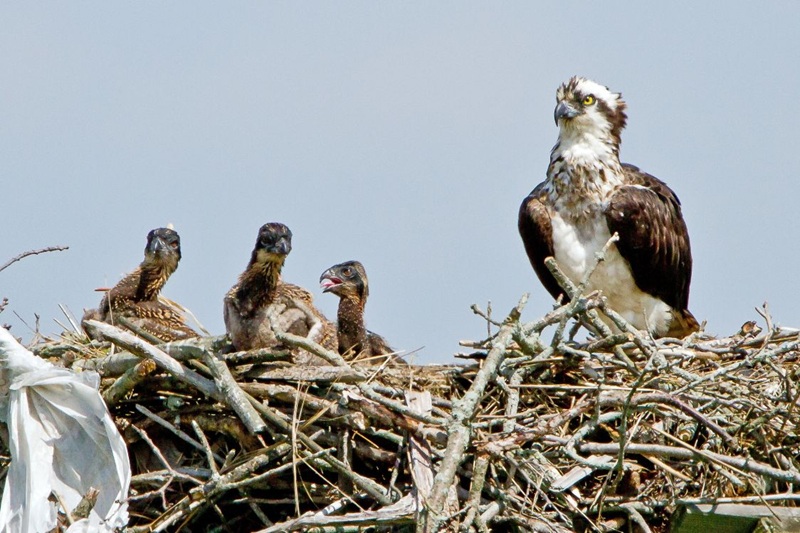
“Nests that had three young, lost one, then two, and in some cases, no nestlings survived at all,” explained Brown. “A common message I heard from our volunteers was that this was the first time in years that the nest they monitored was unable to produce any young or was unoccupied.
One of Audubon’s partners, the Conanicut Island Raptor Project (CIRP) in Jamestown, has a camera installed overlooking an Osprey nest located on Audubon’s Marsh Meadows Wildlife Refuge. “We’ve documented successful fledglings from this nest since 2005,” CIRP Manager Chris Powell noted. “2026 is the first year on record where these adults did not fledge any young.”
As a result, only 38% of the 339 nests monitored this season were successful – one of the lowest percentages in the past decade. As a comparison, in 2025, roughly 70% of nests were successful. However, in 2025 the data showed an overall drop in total nests from the previous year. This trend is a concern that Audubon will be watching closely.
Discussions with partners at RI DEM, Connecticut Audubon and Mass Audubon revealed similar declines being reported. “We realized that this pattern was more widespread than originally thought,” said Audubon Director of Bird Conservation Sarah Deckel. “Ospreys throughout southern New England, New Jersey, and even as far south as the Chesapeake Bay are following a similar trend. If nest success continues to follow this downward trend, the Osprey population may be at risk – again.”
Currently, Audubon is considering three possible scenarios.
- More Ospreys Lead to More Competition.
Osprey have rebounded dramatically in recent decades. With steep population increase, there comes a point where there isn’t enough food or space for all birds to succeed. They start to outcompete each other, reducing breeding success.
- Decrease in Food Supply.
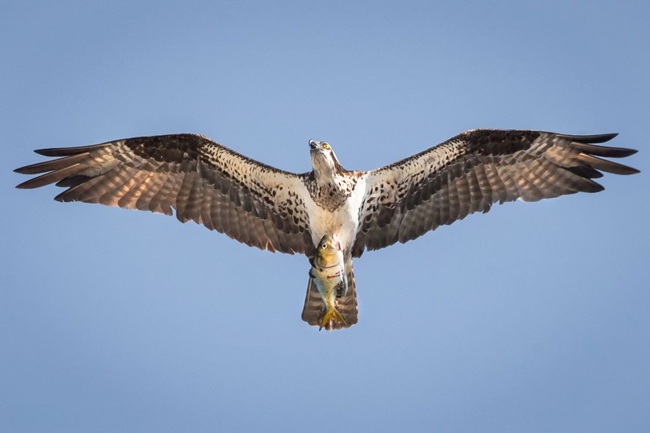
Ospreys preferred prey are Atlantic menhaden during the breeding season. Fisherman and biologists in several areas of New England have reported lower populations of menhaden, however additional studies are needed to determine if food shortages contributed to nest failures in Rhode Island.
- Both Factors Together.
There may be multiple, interactive factors, including increased competition and reduced food availability for adult Osprey as well as their young.
Studying the causes of these nest failures is critical to understanding emerging threats to Osprey. These raptors have begun to migrate south but will return next year. Audubon plans to expand its research efforts in 2027 and collect more robust data to better understand prey availability and changes occurring across the region.
To learn more about Audubon’s Avian Research Initiative and support bird conservation efforts, visit asri.org/osprey.
Photo Captions:
- Osprey (side view) with Atlantic Menhaden by Peter Green.
- Osprey with Atlantic Menhaden by Jason Major.
- Osprey nest with adult and nestlings by Butch Lombardi.
The Audubon Society of Rhode Island is an independent not-for-profit environmental organization dedicated to the protection of birds, wildlife, and their habitats through environmental education, advocacy, and land conservation. The state’s first environmental organization, the Society now protects nearly 10,000 acres in a network of refuges, pristine properties and wildlife habitats. One of the largest private environmental educators in the state, Audubon education staff teaches approximately 30,000 people across the region each year.